
THE SECRETS OF CONTINUOUS CANNONS
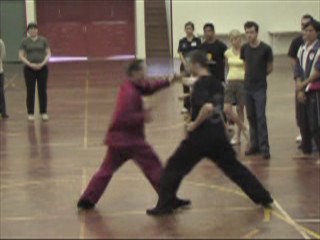
The famous tactic of Continuous Cannons
After having developed basic combat skills like correct timing, correct spacing, sound judgment, instantaneous change, and fluid movement, in Combat Sequences 1 to 4, participants progress to Combat Sequences 5 to 8 where they expand the repertoire of their combat techniques.
Besides providing basic combat skills, the first four combat sequences also provide sufficient techniques for the participants to handle any strikes, which can be generalized into coming from four directions, namely top, middle, bottom and sides. In other words, having practiced Sequence 1 to 4, the participants would be able to handle any hand attacks. The techniques, however, are limited. In fact they are purposely meant to be limited so that the participants can focus on developing skills.
Sequences 5 to 8 expand their techniques remarkably. Whereas the left-leg mode is mainly used in the previous four sequences, in the next four sequences the right-leg is mainly used, thus enabling the participants to be proficient with both legs as the leading leg. Sequences 5 to 8 also introduce the tactic of pressing attacks.
A famous but little understood tactic to implement pressing attacks is “Continuous Cannons”, which is called “lian zhu bao” in Mandarin or “lin chu pao” in Cantonese. “Continuous Cannons” are introduced in Sequence 5, as shown in the video clips below.
Tempting an Opponent with a False Opening
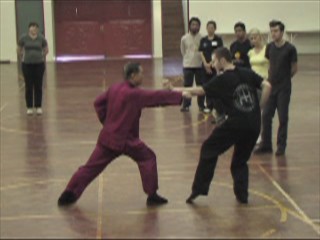
Unlike in the earlier Sequences 1 to 4, here the initiator uses a right Bow-Arrow Stance instead of a left. His body is left unprotected. This is a trap. As the opponent attacks, the exponent wards off, threads, and counter-strikes all in one smooth fast movement, hitting the opponent before he realizes what has happened. This is a famous tactic called “Continuous Cannons”.
The Famous Tactic of Continuous Cannons
The famous tactic of “Continuous Cannons”, which is “lian zhu bao” in Mandarin or “lin chiu pao” in Cantonese, is often heard but seldom known. The secret is revealed. It is actually quite simple but formidable, and is very effective as pressing attacks. Only “Fierce Tiger Speeds Through Valley” is used in this example, but it can be combined with “Fierce Tiger Steals Heart”.
The Mechanics of Continuous Cannons
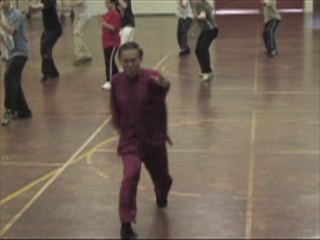
The mechanics of “Continuous Cannons” are shown. Here the pressing tactic is composed of a continuous repetition of three techniques, namely “Fierce Tiger Speeds Through Valley”, “Single Tiger Emerges from Cave” and “Single Tiger Emerges from Cave” again. The three patterns are performed as if they were one smooth pattern.
Continuous Attacks at Middle, Bottom and Side
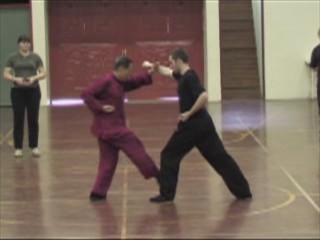
After “Continuous Cannons”, instead of striking the opponent's middle level with “Fierce Tiger” again, Grandmaster Wong strikes his bottom level with “Previous Duck”. He can then continue with “Fierce Tiger” to resume the “Continuous Cannons”, but instead he changes to a side attack using “Golden Star”. Notice that Grandmaster Wong guards the opponent's leading hand before executing the “Golden Star”. The pressing attacks are on three fronts, namely middle, bottom and side.
Progression from Two Moves to One
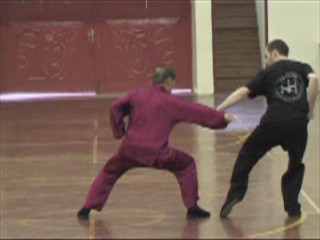
Grandmaster Wong shows the progression from two moves to one move before executing “Precious Duck”. In the earlier video clip, two moves were used, namely right Single Tiger and left Single Tiger. Here only one move is used, namely left Single Tiger. Reducing moves is one of many ways how a practitioner may progress in his performance.
Tigers, Dragons and Precious Duck
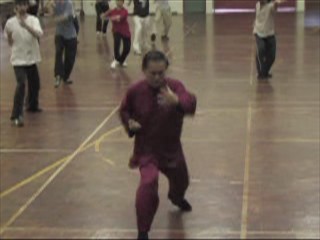
The mechanics of pressing attacks are shown here in solo. They consist of two Fierce Tigers, two Single Tigers, a Golden Dragon and a Precious Duck. This is a version of “Continuous Cannons” and forms part of Sequence 5.
The Skill of Fast Retreat
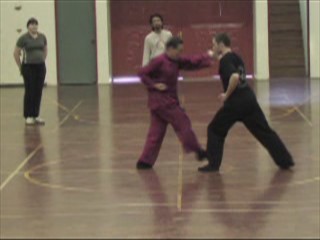
Sequence 5, “Fierce Tiger Speeds Through Valley”, is demonstrated slowly. The responder counters the Golden Star with “Immortal Emerges from Cave”, followed immediately with “Fierce Dragon Across Stream”, which often strikes the opponent unless he is well trained.
Pattern Practice for Picture-Perfect Form
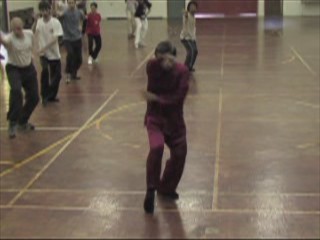
“Fierce Tiger Speeds Through Valley” is performed pattern by pattern. One main objective is to ensure picture-perfect form, without which the practitioners would not be able to derive the best advantages the patterns provide in given situations.
Going Back One Step
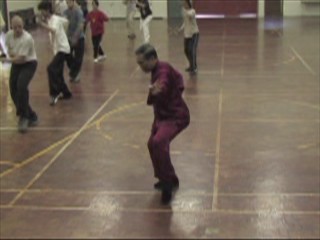
The responder's mode of Sequence 5 is performed. This illustrates how the sequences are developed. If you are not proficient in performing a sequence smoothly, you should go back one step to practice its patterns in picture-perfect forms. "Going back one step" is an important training concept in our school.
LINKS
Review of the Intensive Shaolin Kungfu Course in Sabah in March 2007
- Overview 1 : The Fundamentals
- Overview 2 : The 16 Combat Sequences
- Overview 3 : Are They Performing Kungfu Dance?
- The Basics of Shaolin Kungfu Training
- Fundamental Combat Skills
- Defeat you Hand to your Opponent, Victory you Create Yourself
- Avoiding Disadvantages and Seeking Advantages
- Basic Principles and Tactics of Combat
- Skills derived from Sparring can be Rewardingly used in Daily Life
- Some Secrets in Practicing Genuine Kungfu
-
Various Ways to Move into an Opponent
- Applying Combat Sequences in Sparring
- Linking Sequences to be More Combat Efficient
- The Secrets of Continuous Cannons
- The Mechanics of Continuation
- Marvelous Techniques Beget Marvelous Techniques
- Perfecting Forms and Developing Force
- Applying Tactics in Combat
-
Objectives of Form Training in Solo
- Being Fluent in Kicking Techniques before Applying them in Combat
- Using Tactics in Kicking Attacks and Defences
- Different Levels of Sophistication in Sparring and Fighting
- The Legacy of Uncle Righteousness: Secret of Continuous Cannons and their Counters
-
Benefiting from the Experiences and Teachings of Past Masters
- Poetic Patterns Can be Very Deadly
- Moving Back One Step when in Diffiuclt Situations
- Linking Sequences to Form a Kungfu Set
- Felling Techniques in Kungfu are Different from Judo and Wrestling
- Butterfly Palms and Hiding Flowers are Excellent in Countering Felling and Gripping Attacks
-
Let Mercy Flow from the Hands
- Benefits of Solo Set Practice — Combat Sequences 13 to 16
- From Pre-Choice Sequences to Free Sparring
- Applying Shaolin Patterns Correctly and Spontaneously in Free Sparring
- Shaolin Kungfu against Boxing and Kick-Boxing
- Shaolin Counters against Wrestling Shoots
- The Secret of Grandmaster Ho Fatt Nam
- Why Shaolin Kungfu is Technically Faster than Boxing
- Shaolin Techniques, Tactics and Strategies against Boxing
- Revealing Secrets of Past Taijiquan Masters
- Overwhelming Opponents with Just One Pattern
- Poetry and Elegance in Effective Combat