
APPLYING COMBAT SEQUENCES IN SPARRING

A combat sequence during the Sabah Intensive Shaolin Kungfu Course of March 2007
We in Shaolin Wahnam believe that kungfu can be used for fighting.
Those who are not connected with kungfu today will find this statement ridiculous. It is as ridiculous as saying that we believe food can be eaten or a swimmer can swim!
But the kungfu situation today is really ridiculous. So many kungfu and wushu (which is a Chinese term for kungfu) practitioners do not believe that kungfu can be used for fighting that saying it can be used for fighting is actually in a minority. And to actually use kungfu for sparring or fighting is in a very rare minority.
Some world known kungfu (including Taijiquan) masters even explicitly say that kungfu cannot be used for fighting! Many use Kick-Boxing, Karate or other martial arts in their sparring practice, though some of them still call it kungfu.
What they choose to use is of course their right and prerogative, but we in Shaolin Wahnam are dedicated to preserve the martial aspect of kungfu. We are able to use kungfu for sparring and fighting because we still have an effective sparring methodology and are willing to share it with those who are deserving and want to benefit from it.
One can use kungfu for fighting only if he has followed a sparring methodology using kungfu forms. If he only practices kungfu forms in solo, he will fight haphazardly.
An essential aspect of our sparring methodology is combat sequences. The video clips below show how participants at the Sabah Intensive Shaolin Kungfu Course of March 2007 applied the first four combat sequences in their sparring.
Linking Patterns into Sequences
Having learnt one-step sparring or miscellaneous techniques, participants progress to sequence sparring. Instead of attacking with a pattern at a time, the attacker links various attack patterns into an attack sequence. Here the three attack pattern of “Black Tiger Steals Heart” are executed continuous as one smooth sequence, which is also called “Black Tiger Steals Heart”.
Continuing a Sequence with One more Attack
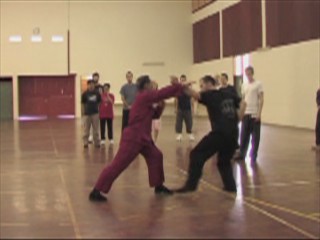
After attacking with one sequence, the initiator adds one more attack. Here, after three patterns of “Black Tiger”, the initiator continues with a “Poisonous Snake”, making four attack patterns in this sequence. In our sparring methodology, we take out the first of the four attack patterns, thus leaving two Black Tigers and one Poisonous Snake to form the second combat sequence, which we name “Poisonous Snake Shoot Venom”.
Sequence Performed as if One Smooth Pattern
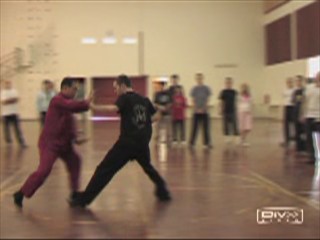
“Poisonous Snake Shoots Venom”, is employed in the attack. The whole sequence of three attack patterns and three defence patterns is performed smoothly as if they were one continuous pattern.
Two Important Secrets Shown Here
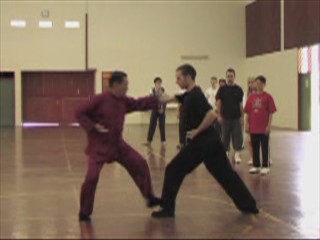
This video clip reveals two secrets many martial artists may not know but may be fatal to them in real combat. The first secret is footwork adjustment. But with this footwork adjustment, you would be too close to your opponent to be safe. The second secret is coverage. You must cover your opponent adequately so that he cannot counter-attack you.
Top, Middle and Bottom Strikes
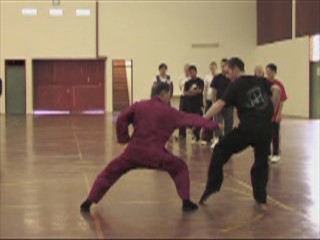
Here is Combat Sequence 3, which is called “Precious Duck Swims through Lotus”. This sequence incorporates top, middle and bottom strikes. Note the footwork adjustment.
Variation from a Combat Sequence
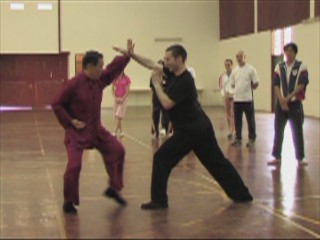
Here is a variation in Sequence 3. Before your opponent attacks you after he has swept at your low punch, you can circulate your hand around his sweep to avoid it and immediately swing a horn punch at his temple.
Retreating a Step when in Difficulty
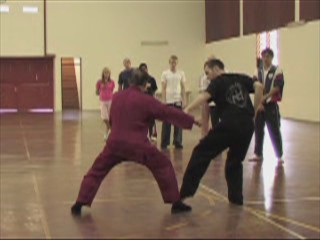
Here are some finer points of Combat Sequence 4, “Hang a Golden Star at a Corner”. It is important to cover the opponent's hand to prevent his counter-strike, but be careful to prevent the opponent from kicking at your groin. What could he do? He can merely move back a step. The same principle is applicable to daily life. If situations seem impossible, just move back a step.
The Importance of the Guard Hand
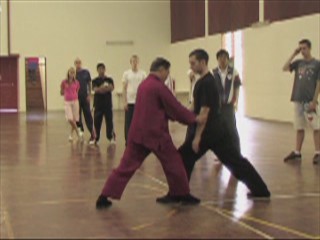
The guard hand is very importamnt when you make a close-range attack, as in “Hang a Golden Star”. Without the guard hand, it would be easy for an opponent to cause serious damage in a counter-attack. There are many possibilities you can use if he counter-attacks.
One Hand Against Two Hands
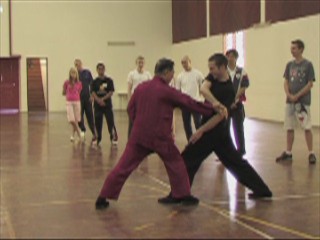
Here is the tactic of “one against two”, i.e. using one hand to tame two hands of an opponent. With the opponent so controlled, you may strike him easily -- if he does not know how to counter.
Reinforcing Skills to Become Second-Nature
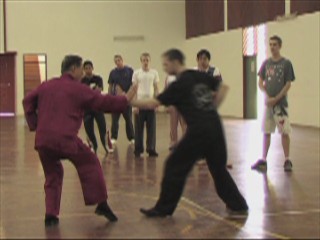
Combat Sequence 4 is performed slowly to show the teaching points mentioned. Take note of correct spacing and correct timing. It is very important to cover your opponent before attacking him so that you are safe from his surprised counter-attacks.
LINKS
Review of the Intensive Shaolin Kungfu Course in Sabah in March 2007
- Overview 1 : The Fundamentals
- Overview 2 : The 16 Combat Sequences
- Overview 3 : Are They Performing Kungfu Dance?
- The Basics of Shaolin Kungfu Training
- Fundamental Combat Skills
- Defeat you Hand to your Opponent, Victory you Create Yourself
- Avoiding Disadvantages and Seeking Advantages
- Basic Principles and Tactics of Combat
- Skills derived from Sparring can be Rewardingly used in Daily Life
- Some Secrets in Practicing Genuine Kungfu
-
Various Ways to Move into an Opponent
- Applying Combat Sequences in Sparring
- Linking Sequences to be More Combat Efficient
- The Secrets of Continuous Cannons
- The Mechanics of Continuation
- Marvelous Techniques Beget Marvelous Techniques
- Perfecting Forms and Developing Force
- Applying Tactics in Combat
-
Objectives of Form Training in Solo
- Being Fluent in Kicking Techniques before Applying them in Combat
- Using Tactics in Kicking Attacks and Defences
- Different Levels of Sophistication in Sparring and Fighting
- The Legacy of Uncle Righteousness: Secret of Continuous Cannons and their Counters
-
Benefiting from the Experiences and Teachings of Past Masters
- Poetic Patterns Can be Very Deadly
- Moving Back One Step when in Diffiuclt Situations
- Linking Sequences to Form a Kungfu Set
- Felling Techniques in Kungfu are Different from Judo and Wrestling
- Butterfly Palms and Hiding Flowers are Excellent in Countering Felling and Gripping Attacks
-
Let Mercy Flow from the Hands
- Benefits of Solo Set Practice — Combat Sequences 13 to 16
- From Pre-Choice Sequences to Free Sparring
- Applying Shaolin Patterns Correctly and Spontaneously in Free Sparring
- Shaolin Kungfu against Boxing and Kick-Boxing
- Shaolin Counters against Wrestling Shoots
- The Secret of Grandmaster Ho Fatt Nam
- Why Shaolin Kungfu is Technically Faster than Boxing
- Shaolin Techniques, Tactics and Strategies against Boxing
- Revealing Secrets of Past Taijiquan Masters
- Overwhelming Opponents with Just One Pattern
- Poetry and Elegance in Effective Combat